A look behind the world’s best-rated workplace experience according to Leesman: 4 areas we focus on that you can too
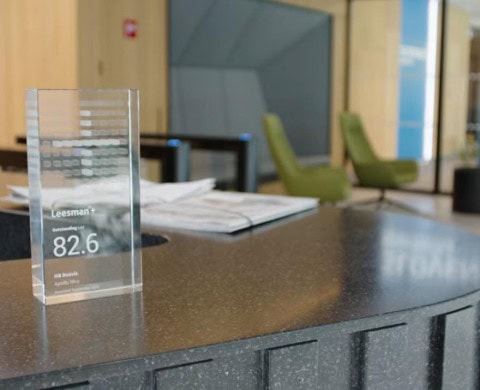
At the end of 2025, Leesman, the global benchmark for workplace experience, rated our portfolio the best in the world according to their methodology. We assessed seven projects across four countries, and all achieved impressive results. You can find the details here.
Today, we want to take a closer look at how we build a top-tier workplace experience across our projects. Because it’s not just a feeling that people genuinely feel good in the spaces we design, build and manage; they do. And the results confirm it.
More importantly, there’s plenty you can take from our approach and apply to your own offices. After all, workplace experience is directly linked to how people perform at work – and, ultimately, to how your business performs.
The mindset shift
We’ve always designed spaces with people and their needs in mind. But over time, we came to realise that truly understanding their experience means actually measuring it.
“Real estate is no longer just about concrete, glass and steel. It’s about people. And without understanding their needs, you can’t truly understand what your clients, investors or employees expect from the spaces you create,” states Matúš Lipták, COO, HB Reavis
Of course, informal interactions can give you valuable input. You bump into a colleague or a member of a tenant’s team in the hallway and chat about how their meeting went in the new soundproof meeting room. In fact, that’s also how we originally gathered feedback on the spaces we built, gradually moving towards conducting research, collecting data and measuring the workspace experience.
But we realised we wanted to take it even further: apply globally recognised methodology and collect data and standardised information about how well our offices actually support the people and businesses that use them. Tenant experience has always been central to us, but today, our approach to understanding it is 100% data-led and benchmarked against the highest industry standards.
That’s where Leesman come in. It gives us a standardised way to gather data across different aspects of workplace experience and understand how our spaces really perform in comparison with the most advanced offices around the world.
Workspaces centered around occupiers and services
The assessment doesn’t just focus on the physical aspects of a workspace. Good daylight and acoustics provide an essential foundation, but today, creating a great workplace experience goes much further.
“We’ve entered a new generation of office development. It’s no longer focused solely on providing workspace, but increasingly on the people who use it and the services that support their everyday experience,” says Cezary Błaszczyk, Commercial Director HB Reavis Poland
So, what four areas have we focused on to reach the top of the Leesman workplace benchmark?
Measuring the experience
Today, we’re seeing demand for office space decline across many markets. What might seem like a threat is, in fact, an opportunity. As companies become more selective about the spaces they choose, and people about the places they want to work at, creativity, quality and the overall experience a workplace can offer become increasingly important.
We see the market becoming increasingly experience-driven. That means we need to be more deliberate about measuring tenant experience and understanding what actually makes a difference to the people using our buildings. In a way, we create our spaces together with their users.
It’s an extra standard we focus on – and something you can apply in your own workplace too. Start by asking a simple question: “How do people really feel here?”
“If a landlord thinks tenant experience isn’t necessary, I’d say: think twice. People appreciate knowing that their office is a place where their voice is heard,” explains Beata Kepowicz, CFOO (Poland) CMS, occupier at Varso Tower.
What this looks like in practice
Here are some of the questions the Leesman assessment explores in this area, which you can focus on in your own workplace:
- Does the workspace enable me to work productively?
- Does it have a positive impact on my overall wellbeing?
- Is the design of my workplace important to me?
- Am I proud to bring visitors to my workplace?
- How well does my workplace perform when it comes to natural light, air quality, noise levels and the variety of workspace types available?
And here’s how our colleagues put it:
Building relationships, not just spaces
We spend roughly a third of our lives at work. So while an ergonomic chair or a well-designed desk certainly matters, workplace experience is also shaped by the relationships people build and how openly they can communicate.
For us, that means building genuine relationships with the teams of the companies based in our buildings. In your workplace, it can be as simple as regularly talking to your teams about how they experience the office and what could make their working day better.
We see feedback as an opportunity, not a risk. When you actively ask people what they need, and then act on what you hear, as we’ll explore in the next section – you can turn that feedback into a competitive advantage.
“Most landlords provide space. Square metres. Perhaps in an attractive, sustainable building. For us, the key has been going beyond that standard – not only in the space we provide, but also in how we communicate,” stresses Tomáš Gurský, Co-Founder Lab 28, occupier at Nivy Tower.
What this looks like in practice
Want to take a closer look at this area in your own workplace? These are some of the questions Leesman asks as part of its assessment:
- Do I feel a sense of community at work?
- Is it easy to share ideas and knowledge with colleagues?
- Are my colleagues easily accessible?
- Do I have enough opportunities for informal social interaction?
- Does my workplace support learning from others?
Watch the video for more on how we approach this:
Turning feedback into action
The Leesman assessment isn’t a box-ticking exercise. From the very beginning, we knew that gathering feedback would also mean acting on what we heard. And an assessment on this scale inevitably creates a certain level of pressure: once you ask people what they think, you need to be prepared to respond.
At the same time, it creates an opportunity for very specific conversations about issues that might otherwise remain unaddressed. A structured, standardised assessment can bring topics to the surface that may never come up in everyday conversations.
“We don’t just measure tenant experience. We integrate the findings into our operational and strategic decision-making,” continues Cezary Błaszczyk, Commercial Director, HB Reavis Poland
For us, the results were reassuring: they showed that we were on the right track. But they also gave us something to work with. Over the past few months, we’ve been integrating the findings into how we operate and make decisions. And that reinforces an important lesson: gathering data is only the beginning. What matters is what you do with it.
“It’s a big responsibility. Once you give people a voice, you also have a responsibility to act on what you hear,” concludes Beata Kepowicz, CFOO (Poland) CMS, occupier at Varso Tower
What this looks like in practice
This is where you can really explore whether the workspace gives your teams what they need to thrive every day. Leesman looks at questions such as:
- Does the workspace support focused work, creative collaboration, meetings and private conversations?
- How well do services and technologies such as Wi-Fi, room booking systems, audio-visual equipment and desk booking support people in their work?
Looking beyond the workspace
We’ve already touched on many of the factors that shape our day-to-day experience in a building: how it is managed, the services available on site and even its overall atmosphere. But a great workplace experience goes beyond the space itself. Sometimes, it’s the extras around it that make a real difference.
Events are one example. They give people a chance to step away from work, recharge and connect with others in a different setting while still being part of the wider workplace experience.
But it’s not just about events. Concierge services, mobility solutions such as bike and scooter rentals or being able to book a parking space all contribute to how people experience their working day. Hospitality is a big thing too. Imagine taking part in wellbeing programs, getting a massage in the middle of the working day or grabbing a foldable bike to run errands during lunch break at the reception simply because it’s right there.
Together with the physical workspace, these details form an ecosystem that can make coming to the office easier, more enjoyable and more rewarding.
What this looks like in practice
And how far can you take this? Leesman looks beyond the essentials, exploring the wider experience around the workplace too:
- Do I have places where I can mentally refresh during the working day?
- Does my workplace support my overall wellbeing and physical health?
- Does the design of my workplace help me maintain my energy levels and do my job well?
- Does my workplace encourage me to be physically active?
- Does my workplace help me make healthy eating choices?
- What services and facilities are available, such as hospitality services, a restaurant or canteen, bicycle parking, leisure facilities or showers?
So when you think about your own workplace, don’t stop at the desk, meeting room or kitchen. What else could you offer that would genuinely make your teams’ working day better?
Building a better workplace experience starts with listening
Creating a great workplace experience doesn’t happen overnight. But you can start by asking the right questions: how do people really experience your workplace, what matters to them and what could work better?
This approach helped us build the world’s best-rated workplace portfolio. But reaching the top doesn’t mean the work is done. We keep listening, measuring and acting on what we learn – because people’s needs keep evolving, and so should their workplaces.
And that’s something you can start doing in your own offices too.